 blog
Ready to Wear Engagement Rings: A 2026 Guide
Table of Contents
- What Makes a Ready to Wear Engagement Ring Different
- Why Ready to Wear Engagement Rings Appeal in 2026
- What to Look For in a Pre-Set Engagement Ring
- Lab-Grown Diamond Engagement Rings: A Modern Option
- When Ready to Wear Meets Bespoke Engagement Ring Design
- The Engagement Ring Resizing Process Explained
- Conclusion
- Frequently Asked Questions
Last Updated: September 28, 2026
What Makes a Ready to Wear Engagement Ring Different
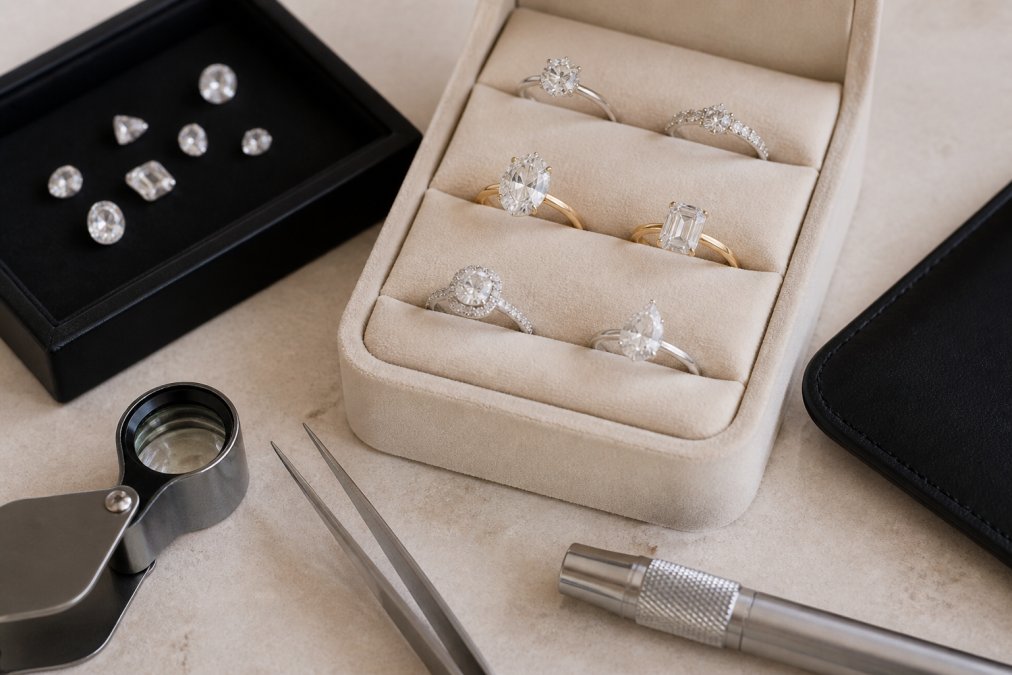
A ready to wear engagement ring is a finished piece, already set with its centre stone, that you can buy and take home without commissioning a custom design. This guide from MARA Bridal Luxury Jewellery explains how these rings differ from bespoke commissions, what to check before buying, and when custom design is the better path.
The distinction sounds simple. In practice, it changes how you shop, how long you wait, and how much control you have over the final result.
With a pre-set ring, the design decisions are already made. The diamond is chosen, the setting is cast, and the metal is finished. You are selecting from what exists rather than shaping what could exist. That suits buyers who want certainty and speed. It frustrates buyers who have a clear picture in mind and cannot find it on a shelf.
The Australian jewellery market has shifted noticeably here. Lab-grown diamonds now sit alongside natural stones in most showrooms, and that choice alone reshapes what a pre-set ring can offer at a given budget. Guidance from the ACCC on country of origin and gemstone claims is worth reading before any purchase, because not every seller describes stones and treatments accurately.
Below, we break down how ready to wear rings compare with bespoke work, what to inspect closely, and where each option genuinely wins.
Why Ready to Wear Engagement Rings Appeal in 2026
Speed and certainty drive most ready to wear purchases. A finished ring can be sized, boxed, and in your hands within days rather than months.
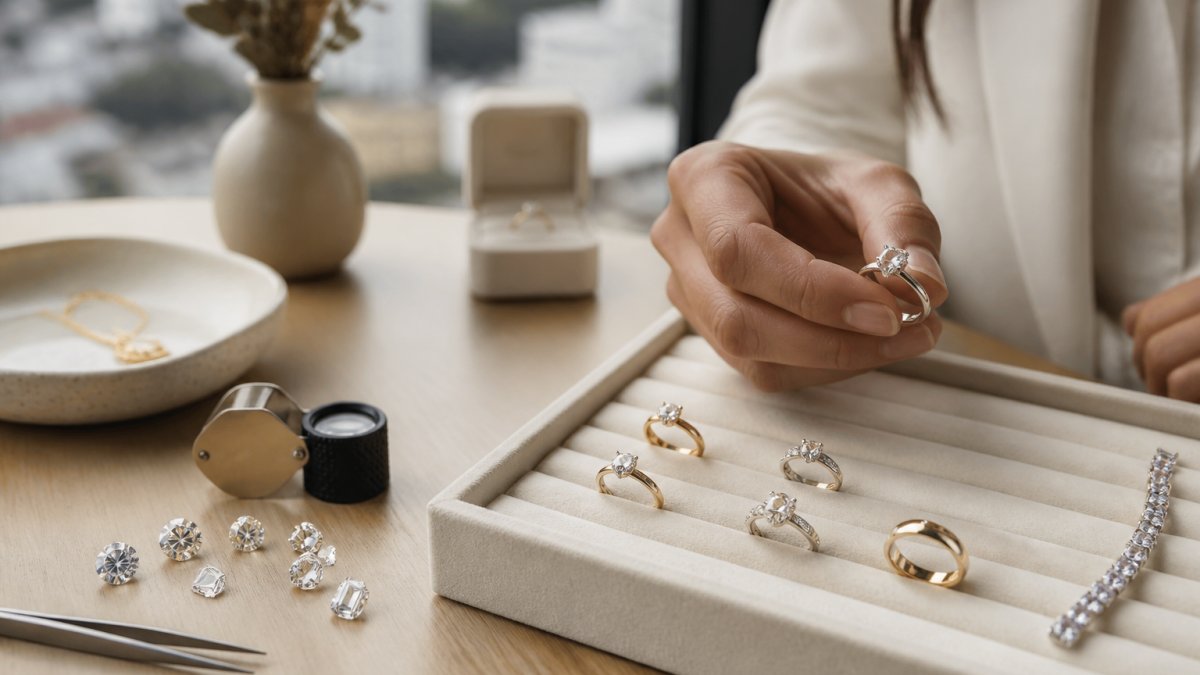
Couples increasingly shop together and want to see the actual stone before committing. A pre-set ring removes the guesswork of imagining a CAD render. What you try on is what you get.
There is also a practical financial logic. Pre-set rings carry no design fee, no casting timeline, and no back-and-forth approvals. That can mean more of the budget goes into the diamond itself.
But there is a trade-off most guides skip. A ready to wear ring is only a bargain if it fits your hand and your taste without compromise. Buying pre-set purely to save time, then paying for significant alterations later, rarely works out cheaper.
What to Look For in a Pre-Set Engagement Ring
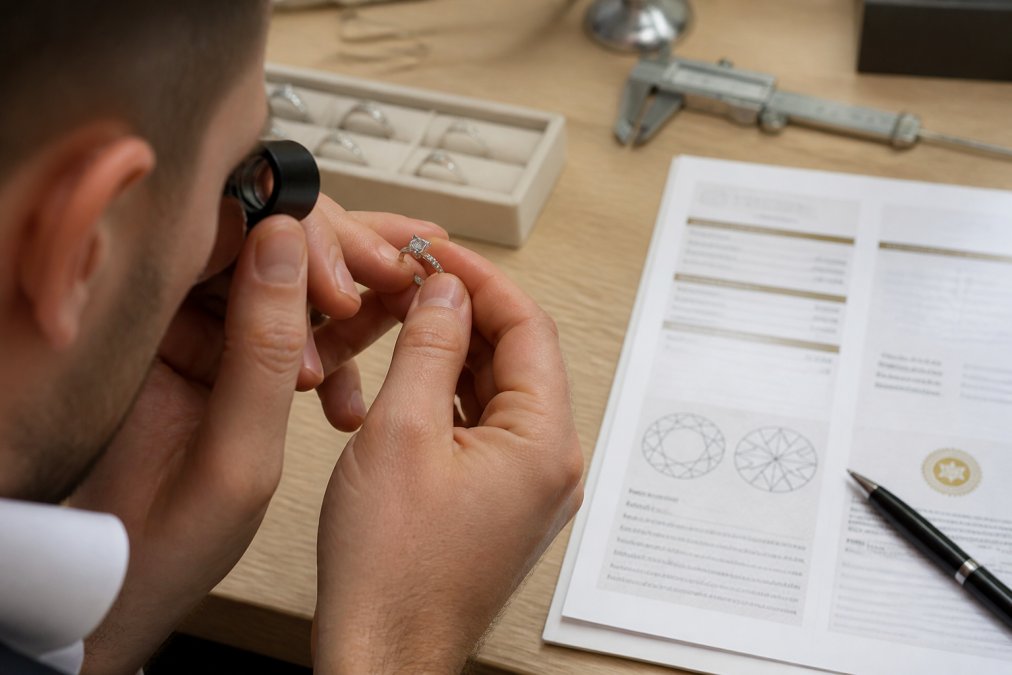
Inspect four things before buying any pre-set ring: the setting style, the metal, the diamond's certification, and how the stone sits in its mount.
Setting Style and Metal Choice
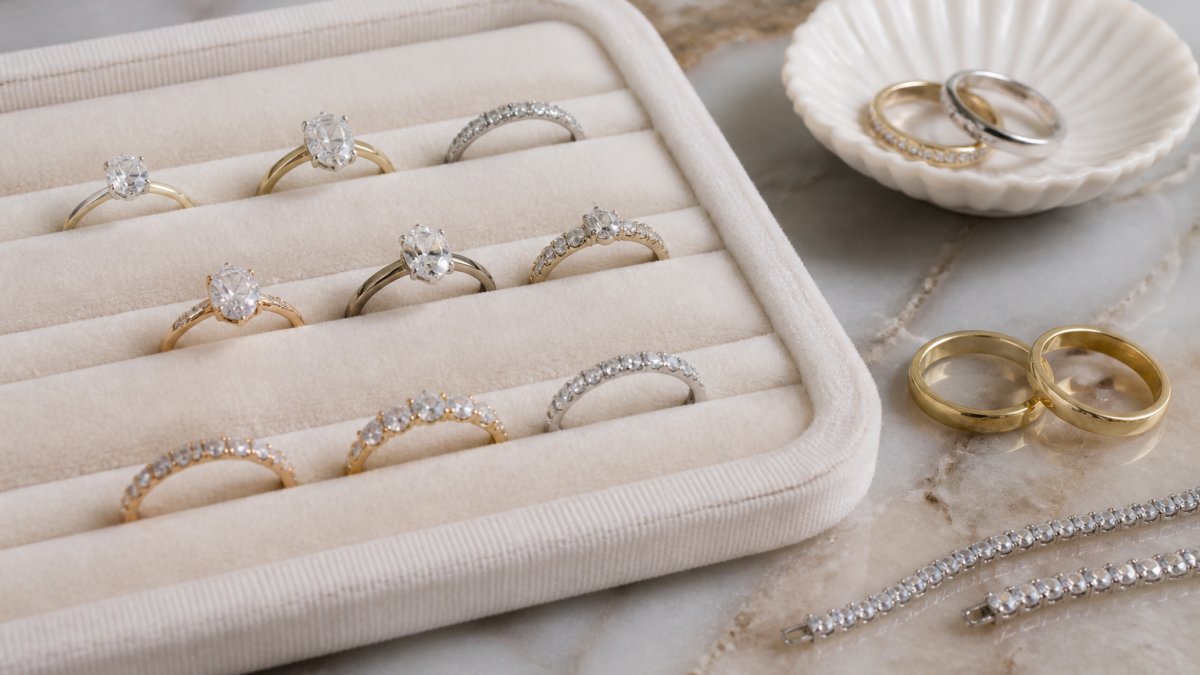
The setting determines how the diamond catches light and how protected it is. A few common options:
- Solitaire: one stone, minimal metal, maximum light. Timeless and easy to resize.
- Halo: a ring of smaller stones around the centre. Adds visual size without a larger diamond.
- Bezel: metal wraps the diamond's edge. The most protective setting for active wearers.
- Pavé: small stones set along the band. Elegant, but harder to resize and clean.
Metal choice matters just as much. Platinum is dense and holds its shape over decades. White, yellow, and rose gold suit different skin tones and are easier to work with for future adjustments. If you plan to resize later, gold is generally the more forgiving option.
Diamond Certification and Quality Markers
A diamond's certification is its passport. Independent grading reports from recognised laboratories document the four Cs: cut, colour, clarity, and carat weight. Without one, you are trusting the seller's word alone.
Ask to see the report before purchase. Match the report number to the stone where possible. Cut matters most for how a diamond performs, so a well-cut stone of modest carat weight often outshines a larger, poorly cut one.
Lab-Grown Diamond Engagement Rings: A Modern Option
Lab-grown diamonds are real diamonds, created in a laboratory rather than mined. They share the same chemical, physical, and optical properties as natural stones, and they are graded on the same four Cs.
That last point matters. A lab-grown diamond is not a simulant like cubic zirconia. It is a diamond. The difference is origin, not substance.
For buyers, the practical effect is budget. Lab-grown stones generally allow a larger or higher-quality diamond within the same spend. Couples who prioritise size and sparkle over rarity often find this persuasive.
Where they fall short is resale and long-term value. Natural diamonds have an established secondary market; lab-grown do not, and prices have softened as production has scaled. If you view the ring as an heirloom with resale potential, that is a genuine consideration.
At MARA Bridal Luxury Jewellery, we offer both natural and lab-grown options, so the choice stays with you rather than being steered by what a showroom happens to stock.
When Ready to Wear Meets Bespoke Engagement Ring Design
The line between ready to wear and bespoke is blurrier than most buyers expect. Many pre-set rings can be adapted: a different band, a modified setting, an upgraded centre stone.
True bespoke engagement ring design starts from a blank page. You choose the stone, the metal, the setting, and the proportions. You see renders or try a virtual version before anything is cast.
That process suits buyers with a specific vision, or those who want a ring tied to a personal story. It also suits anyone who has tried on a dozen pre-set rings and found none quite right.
The honest trade-off is time. Bespoke takes longer because it involves design rounds and approvals. If you need a ring within weeks, ready to wear is the safer route. If you have a few months, bespoke gives you a ring no one else owns.
A middle path works well for many couples: start with a pre-set ring you love, then refine one or two elements. You keep the speed while gaining a personal touch.
The Engagement Ring Resizing Process Explained
The engagement ring resizing process adjusts a ring's internal diameter to fit your finger properly. Most rings can be resized up or down by one to two sizes without issue.
The method depends on the ring. Plain metal bands are straightforward: a jeweller cuts the band, adjusts it, and re-solders it. Rings with pavé or channel-set stones along the band are trickier, because the stones must be protected during the work.
| Ring Type | Resizing Difficulty | Typical Approach |
|---|---|---|
| Plain solitaire band | Straightforward | Cut, adjust, re-solder |
| Pavé or channel-set band | More complex | Partial rebuild, stone protection |
| Full eternity band | Most difficult | Often remade rather than resized |
| Bezel-set ring | Moderate | Careful metal work around setting |
Two rules apply regardless of type. First, resize before the proposal if you can, since a ring that fits properly on the day avoids awkwardness. Second, use a jeweller who works with the setting style, not a general repairer.
Sizing also shifts slightly with temperature, time of day, and season. A ring that feels snug in winter may feel loose in summer. Aim for comfortable rather than tight.
Conclusion
Choosing between a finished ring and a commissioned one comes down to how specific your vision is and how much time you have. Ready to wear delivers certainty and speed; bespoke delivers a ring that is unmistakably yours.
MARA Bridal Luxury Jewellery works across both. We offer natural and lab-grown diamond options, a virtual ring try-on service so you can see a design before committing, and private one-on-one consultations in Melbourne or by video. With more than 15 years in Australian fine jewellery, we guide you through stone selection, setting choice, and sizing without pressure.
If you are weighing a pre-set ring against a custom piece, book a private consultation with MARA Bridal Luxury Jewellery and see the difference for yourself.
Frequently Asked Questions
Are ready to wear engagement rings as high quality as custom designs?
Ready to wear rings from a reputable jeweller are crafted to the same standards as bespoke pieces, using certified diamonds and quality metals. The difference lies in choice rather than quality. A pre-set ring is already finished, while a bespoke engagement ring design lets you specify every detail. Both can result in a durable, beautiful ring. If you value speed and simplicity, ready to wear works well. If you want full creative control, a bespoke path may suit you better.
Can ready to wear engagement rings be resized?
Most ready to wear engagement rings can be resized, though the engagement ring resizing process depends on the setting style and metal. Rings with plain bands and few side stones are generally straightforward to adjust. Complex settings with diamonds set around the entire band may limit how much the ring can be resized. A jeweller can assess your ring and advise on the safest approach. Always ask about resizing options before purchase.
Do ready to wear engagement rings come with diamond certification?
Reputable jewellers supply certified diamonds with ready to wear engagement rings, including lab-grown diamond engagement rings. Certification from a recognised laboratory confirms the diamond's cut, colour, clarity, and carat weight. Ask to see the certificate before purchase. If a ring features multiple diamonds, the centre stone is typically the one certified. Certification protects your investment and gives you confidence in the diamond's quality.
What should I look for when buying a pre-set engagement ring?
Focus on four things: the diamond's certification, the metal type and its suitability for daily wear, the setting style and how well it protects the stone, and the ring's fit. Check whether the ring can be resized if needed. Ask about the jeweller's aftercare and warranty terms. A private consultation lets you examine the ring closely and ask questions without pressure, which is especially helpful if you are choosing a style you have not seen in person before.