 blog
blog
Lab Grown Diamond Rings: 2026 Comparison Guide
Table of Contents
- Why Lab Grown Diamond Rings Suit Modern Couples
- What Lab Grown Diamonds Actually Are
- Lab Grown vs Natural Diamond Comparison: What Really Differs
- Popular Styles of Lab Grown Diamond Rings
- Bespoke Engagement Ring Design: From Idea to Finished Ring
- What to Look For When Buying a Lab Grown Diamond Ring
- Common Mistakes to Avoid
- Frequently Asked Questions
Last Updated: 12 September 2026
Why Lab Grown Diamond Rings Suit Modern Couples
Lab grown diamond rings have moved from curiosity to mainstream choice, and the reasons are practical rather than sentimental. At MARA Bridal Luxury Jewellery, we understand that couples are asking sharper questions about provenance, value and design. A lab grown diamond is a diamond: same carbon lattice, same optical brilliance, same position on the Mohs hardness scale. What changes is where it comes from and how the budget stretches.
That single shift reshapes everything downstream. Money that would have gone into a smaller natural stone can instead fund a larger centre diamond, a more intricate setting, or a fully bespoke design built around your story. The Gemological Institute of America's guidance on lab-grown diamonds confirms these stones share the same chemical and physical properties as mined diamonds.
Below, we break down how lab grown and natural stones genuinely differ, which styles suit which hands, and what to check before you commit.
What Lab Grown Diamonds Actually Are
A lab grown diamond is a diamond created in a controlled laboratory environment using either high-pressure high-temperature (HPHT) or chemical vapour deposition (CVD) methods, producing a stone chemically identical to one formed underground. The difference is origin, not substance.
Two production routes dominate. HPHT replicates the intense heat and pressure of the earth's mantle. CVD grows a diamond layer by layer from a carbon-rich gas plasma. Both produce rough crystals that are then cut and polished by the same craftspeople who handle natural stones.
Lab Grown vs Natural Diamond Comparison: What Really Differs
The honest answer is that the differences come down to origin, rarity and resale dynamics, not beauty or durability. A well-cut lab grown stone and a well-cut natural stone of the same specification are visually indistinguishable to the naked eye, even to a trained one without magnification.
Where they diverge:
- Origin: mined from the earth versus grown in a laboratory
- Rarity: natural diamonds are finite; lab grown stones can be produced in volume
- Price: lab grown stones generally cost significantly less at retail, which is why they free up budget for size or setting
- Resale: natural diamonds hold a secondary market more reliably; lab grown stones are not an investment asset
- Certification: both can be graded by independent laboratories, though the reports are labelled differently
If your priority is maximum presence on the hand within a set budget, lab grown wins comfortably. If you want a stone with a resale market and generational rarity narrative, natural is the honest choice. Neither is wrong.
How the Two Compare on Durability and Certification
Durability is identical. Both score 10 on the Mohs scale, and both can chip under a hard enough impact. Neither stone is "softer" than the other, a claim that circulates widely and is simply false.
Certification is where buyers should focus attention. Insist on an independent grading report from a recognised laboratory, and check that the report explicitly states the diamond was laboratory-grown. The Australian Competition and Consumer Commission expects suppliers to describe lab grown diamonds accurately and not mislead consumers about origin. Reputable jewellers disclose this upfront, in writing.
Popular Styles of Lab Grown Diamond Rings
Because lab grown stones cost less, couples often choose cuts and settings that would have been out of reach with a natural stone of the same budget. That changes which styles are practical, not just affordable.
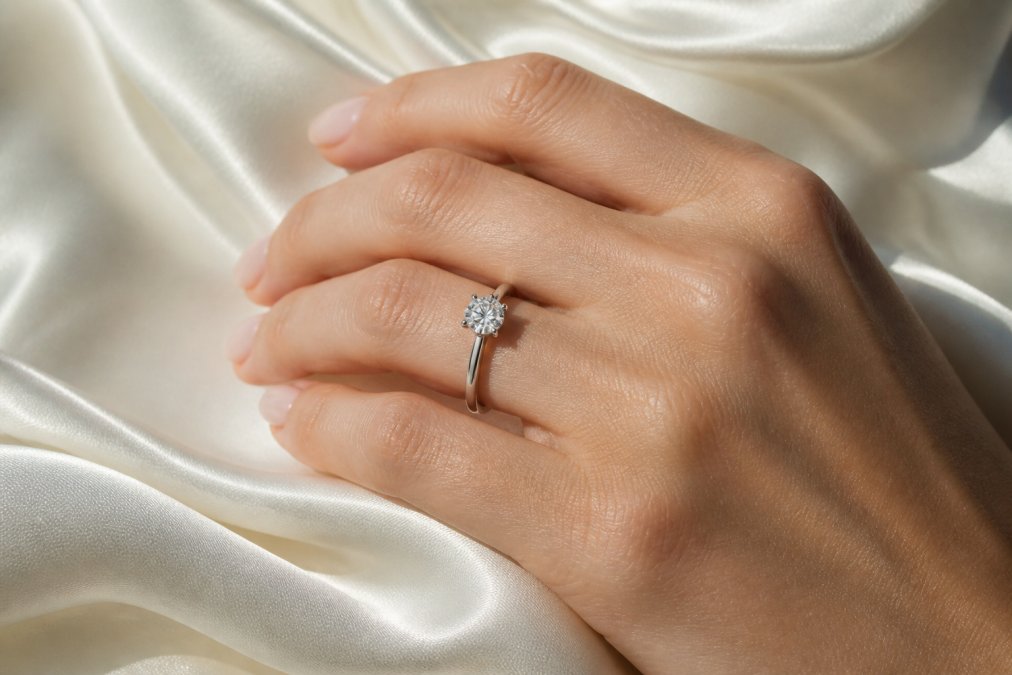
Three silhouettes dominate consultations right now:
- Solitaire: one centre stone, minimal metal, maximum light. Best for a large lab grown stone you want to showcase.
- Halo: a ring of smaller diamonds encircling the centre stone, adding visual size without adding centre-stone weight.
- Three-stone: a centre diamond flanked by two side stones, traditionally symbolising past, present and future.
Solitaire, Halo and Three-Stone Settings
Each setting flatters a different hand and lifestyle. A solitaire on a slender band elongates shorter fingers. A halo suits someone who wants presence without a heavy centre stone, and it photographs beautifully. Three-stone designs work well for couples who want symbolism built into the architecture of the ring.
Bespoke Engagement Ring Design: From Idea to Finished Ring
Bespoke engagement ring design is the process of creating a ring from scratch around your preferences, rather than selecting from a pre-made range. It typically runs through consultation, concept sketches, stone selection, CAD renders, approval and final crafting.
At MARA Bridal Luxury Jewellery, this process is deliberately unhurried. Clients begin with a private consultation, in person or by video, and can preview designs through a virtual ring try-on before committing. You do not need a finished design in mind when you start. Most couples arrive with a mood, a metal preference and a rough idea of style, and the design takes shape from there.
The stages usually look like this:
| Stage | What Happens | What You Decide |
|---|---|---|
| Consultation | Discuss style, budget and story | Metal, overall direction |
| Stone selection | Review certified lab grown or natural options | Cut, carat, colour, clarity |
| Concept and CAD | Sketches and 3D renders produced | Approve or refine design |
| Crafting | Ring is cast, set and polished | Final fit and finish |
Expect the full process to take several weeks rather than days.
What to Look For When Buying a Lab Grown Diamond Ring
Start with the certificate, then the cut, then everything else. A grading report from an independent laboratory is the single most important document in the purchase, because it verifies the four Cs objectively rather than relying on a salesperson's description.
Work through this checklist before you commit:
- Independent grading report supplied, stating laboratory-grown origin
- Report number matches the stone (ask to view it under magnification)
- Cut grade prioritised over carat weight
- Setting inspected for secure claws and smooth finish
- Metal type confirmed (platinum, white gold, yellow gold, rose gold)
- Resizing and aftercare terms explained in writing
- Return or adjustment policy clarified before purchase
Common Mistakes to Avoid
The costliest errors happen before anyone reaches the counter. Buyers who rush, skip certification or assume all lab grown stones are equivalent can end up disappointed.
- Assuming lab grown means low quality. It means lab-origin. Quality still depends on cut, colour and clarity.
- Skipping the certificate. Without an independent report, you cannot verify what you're buying.
- Choosing a setting before the stone. The stone dictates the setting, not the reverse.
- Ignoring the finger. Band width and profile should suit the wearer's hand and daily activities.
- Leaving it too late. Bespoke work takes time. Starting the conversation early removes pressure.
For couples weighing both options, the Gemological Institute of America's diamond grading overview is a useful neutral reference on how cut, colour and clarity are assessed.
Choosing a lab grown diamond ring is a decision about priorities, not compromise. Whether you lean towards a solitaire, a halo or a fully bespoke piece, the right ring comes from unhurried guidance and transparent information. MARA Bridal Luxury Jewellery offers private one-on-one consultations in Melbourne or by video, a virtual ring try-on service, access to both natural and lab grown diamonds, and full creative control from first sketch to finished ring. Book a private consultation with MARA Bridal Luxury Jewellery and design a ring that reflects your story.
Frequently Asked Questions
Are lab grown diamond rings considered real diamonds?
Yes. Lab grown diamonds are real diamonds, formed from carbon with the same crystal structure, hardness and optical properties as those mined from the earth. The difference lies in origin, not substance: one grows in a laboratory, the other forms underground over billions of years. Because of this, lab grown diamond rings behave exactly like natural diamond rings day to day, and they are graded on the same four Cs.
Do lab grown diamond rings hold their value?
Lab grown diamonds generally resell for less than natural diamonds, largely because production costs continue to fall as the technology scales. If resale value matters most to you, a natural diamond may suit better. If your priority is a larger, higher-clarity stone within your budget, a lab grown diamond ring can offer more visible sparkle for the same spend. Discuss your priorities during a consultation so the choice reflects what you actually value.
How do lab grown diamonds compare to natural diamonds in terms of durability?
They are identical in durability. Both measure 10 on the Mohs scale, the hardest known mineral, and both resist scratching under everyday wear. Neither is more prone to chipping than the other, and both can be safely worn daily in an engagement ring or wedding band. Durability should not be a deciding factor in the comparison; setting quality and how you wear the ring matter far more over time.
How does the bespoke engagement ring design process work for lab grown diamond rings?
A bespoke engagement ring design usually begins with a private consultation, in person or by video. You discuss style, stone shape, metal and budget, then review options and, where offered, a virtual try-on. From there, a design is refined and confirmed before production begins. You do not need a finished design in mind before you start; bringing inspiration images or a rough idea is enough for the process to move forward.