 ultimate-guide
Natural Diamonds Melbourne: A 2026 Buying Guide
Table of Contents
- Why Natural Diamonds Still Matter in Melbourne
- Natural vs Lab-Grown Diamonds: What Actually Differs
- The Diamond 4Cs Explained for Real Buying Decisions
- Choosing Loose Natural Diamonds Before You Set Them
- Certification and What to Ask When Viewing a Stone
- Bespoke Diamond Engagement Rings: From Stone to Setting
- The MARA Consultation Experience
- Conclusion: Choosing Natural Diamonds with Confidence
- Frequently Asked Questions
Last Updated: October 7, 2026
Why Natural Diamonds Still Matter in Melbourne
Natural diamonds Melbourne buyers seek are formed deep within the earth over billions of years and carry a geological rarity that no laboratory can replicate. At MARA Bridal Luxury Jewellery, we have spent more than 15 years helping couples understand what that rarity means when they are choosing a stone for a proposal. The difference is not simply chemical.
The Gemological Institute of America's diamond grading standards set the benchmark the entire trade measures a stone against, and that framework applies equally to natural and lab-grown material. What it cannot measure is meaning. A natural diamond is a finite object. Every one recovered is one fewer in existence, and that scarcity is precisely what has made these stones the default symbol of commitment for generations of Australian couples.
Prices for natural diamonds have softened in recent years as lab-grown supply has expanded, which has shifted the conversation in showrooms. Many buyers now arrive assuming natural stones are out of reach. In practice, the gap between a well-chosen natural diamond and its lab-grown equivalent is narrower than most people expect, particularly once you move away from the largest sizes.
Natural vs Lab-Grown Diamonds: What Actually Differs
The two are identical in chemical composition, hardness and brilliance. Both are pure carbon crystallised in the same cubic structure, which is why a gemmologist needs specialised equipment to tell them apart. The distinction is origin, and origin drives everything else: rarity, resale behaviour and emotional weight.
Lab-grown diamonds are created in weeks using high-pressure or vapour-deposition technology. They are real diamonds by every scientific measure, and we offer them because they suit a particular kind of buyer.
What most guides miss is that the two markets behave differently over time. Lab-grown stones have fallen sharply in price as production has scaled, which means they rarely hold value. Natural stones trade in a mature global market with decades of pricing history behind them.
Neither option is the "right" one. A couple who wants maximum size for a fixed budget may find lab-grown compelling. A couple who wants an heirloom with a documented natural origin will usually choose otherwise. We walk clients through both without steering them.
The Diamond 4Cs Explained for Real Buying Decisions
The 4Cs are cut, colour, clarity and carat weight, the four characteristics the Gemological Institute of America's grading system uses to describe a polished diamond. Cut carries the most weight in how a stone actually looks. A well-cut diamond returns light through the top of the stone; a poorly cut one leaks it out the sides and appears dull regardless of its other grades.
Colour runs from D, colourless, down the alphabet as traces of yellow or brown appear. Clarity measures internal inclusions and surface blemishes, graded from Flawless through to Included. Carat is weight, not size, though the two track closely together.
Here is what each grade actually means for the ring on your hand:
| Grade | What It Measures | Practical Impact |
|---|---|---|
| Cut | Light performance and proportion | The single biggest driver of visible sparkle |
| Colour | Absence of tint | Grades G to J look colourless in most settings |
| Clarity | Internal and surface imperfections | VS grades are clean to the naked eye |
| Carat | Weight of the stone | Affects size and price more than beauty |
Which of the 4Cs to Prioritise
Prioritise cut above all else. A diamond with an excellent cut and a slightly lower colour or clarity grade will outshine a poorly cut stone with flawless grades every time. That single decision protects your budget better than any other.
After cut, colour is the next place to be flexible. Once a stone is set in white gold or platinum, the metal masks faint warmth, so a G or H colour stone reads as white to almost every eye. Clarity is where you can save the most without visible compromise. Inclusions graded VS2 or SI1 are typically invisible without magnification, and the price step down from flawless grades is significant.
Carat is the least important of the four for appearance and the most important for price. A well-cut 0.9 carat stone can look larger than a poorly proportioned 1.0 carat one. We encourage clients to choose size last, after they have seen how the other three interact.
Choosing Loose Natural Diamonds Before You Set Them
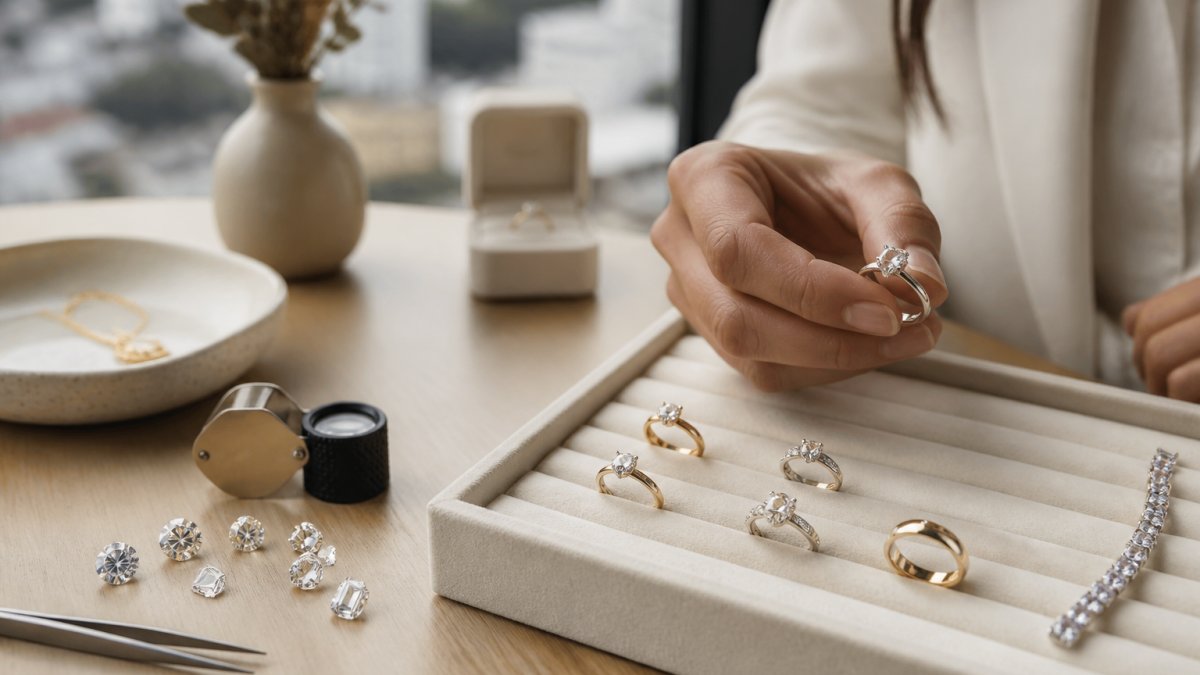
Buying the stone before the setting gives you control that a finished ring cannot. Loose natural diamonds can be turned, tilted and examined from every angle, so you see the actual light performance rather than the impression a setting creates. It also lets you match the stone to a design rather than the other way around.
Start with your budget and work backwards through cut, then colour, then clarity, then carat. This sequence protects the two things you cannot change later: how the stone performs and how it looks in the metal. A setting can be remade. A poorly cut diamond cannot.
When you view a loose stone, check these in order:
- Confirm the cut grade is excellent or very good on the certificate
- View the stone face-up in daylight and under warm indoor light
- Turn it slowly and watch for dark patches that do not move
- Compare it side by side with a second stone of similar grade
- Ask whether the stone is eye-clean at 30 centimetres
- Confirm the certificate number matches the stone's laser inscription
The comparison step is the one most buyers skip, and it is the one that teaches you the most. A diamond seen alone is difficult to judge. A diamond seen beside another reveals instantly whether the cut is doing its job.
Certification and What to Ask When Viewing a Stone
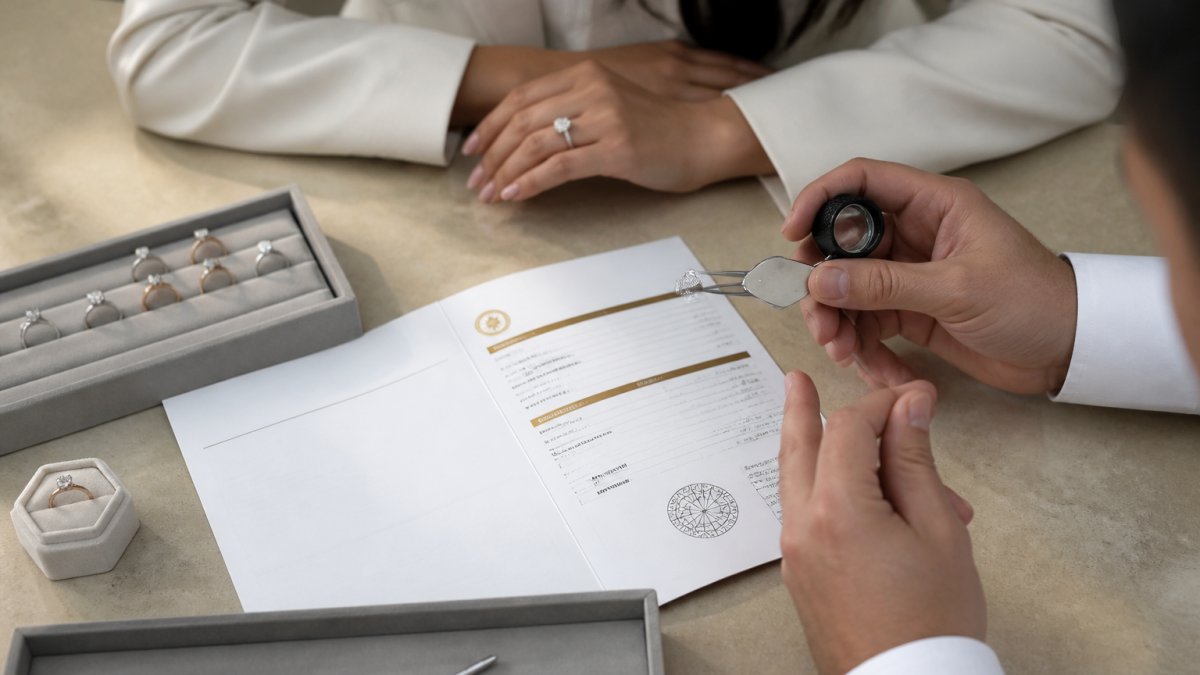
Independent certification is the foundation of any confident purchase. A grading report from a recognised laboratory documents the stone's exact measurements, grades and any treatments applied, and it is the only objective record you will have of what you bought. Without one, you are relying entirely on the seller's description.
The Australian Competition and Consumer Commission's guidance on diamond claims makes clear that descriptions of diamonds must be accurate and not misleading, which is why we insist on documentation for every stone we present. Ask to see the certificate before you discuss price, not after.
Questions worth asking every time:
- Which laboratory graded this stone, and can I see the report?
- Does the certificate number match the inscription on the girdle?
- Has the stone been treated or enhanced in any way?
- Is the stone natural or lab-grown, and does the report state this?
- What is your policy if an independent valuation differs from the report?
That last question separates a confident seller from a defensive one. Any reputable jeweller will welcome an independent check.
Bespoke Diamond Engagement Rings: From Stone to Setting
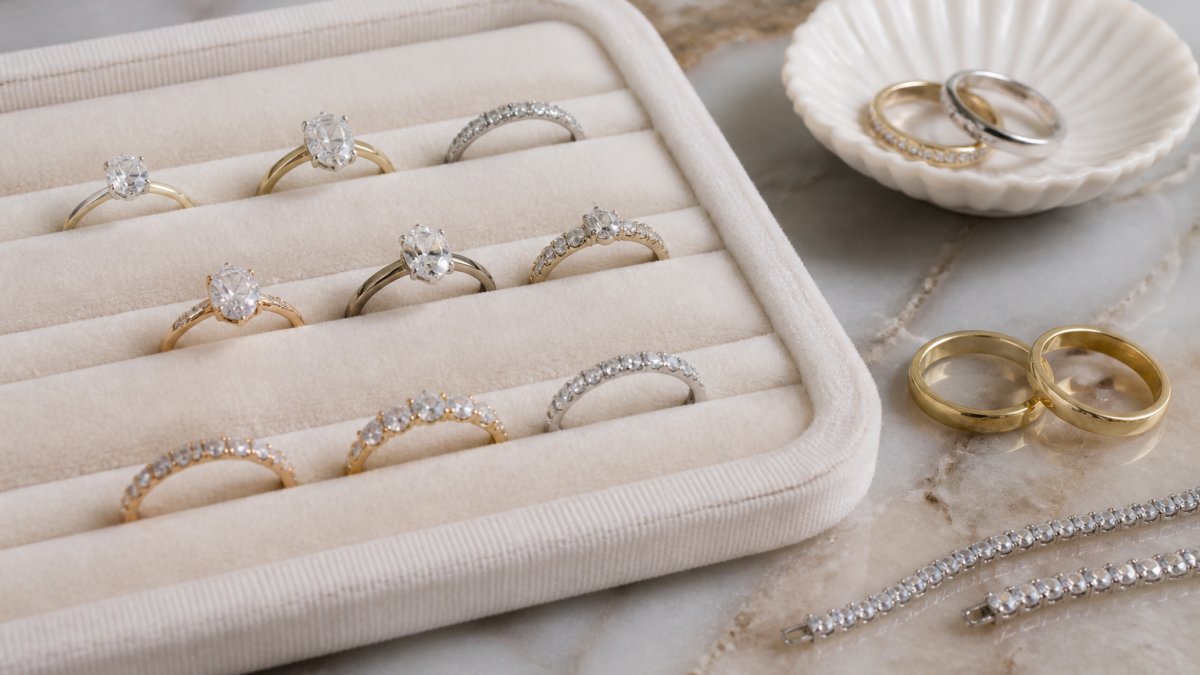
Bespoke diamond engagement rings begin with the stone and the story behind it, not a catalogue page. The process is straightforward once you understand the sequence, and it removes the compromise that comes with choosing a pre-made design that is almost right.
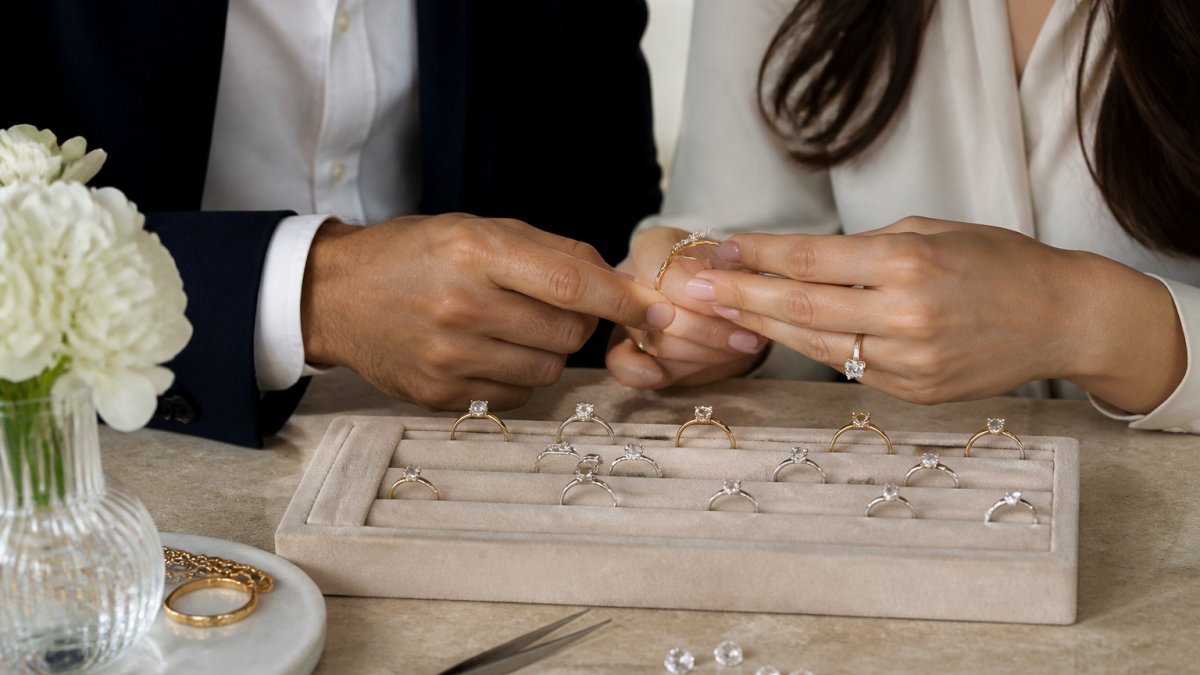
We start with a private consultation, in person or by video, where we discuss the stone, the metal, the setting style and the practicalities of daily wear. From there we move to design, then to a rendering you can review before anything is made.
The advantages of going custom are concrete. You control the proportions of the band, the height of the setting and the way the stone sits on the hand. You can incorporate inherited stones or metal from a family piece. And you can see the design before committing, which is where most of the anxiety around custom work disappears.
For clients outside Melbourne, our virtual try-on service lets you see how a ring reads on a hand before you book anything. It is not a substitute for holding the finished piece, but it removes the guesswork that makes remote custom design feel risky.
| Stage | What Happens | What You Decide |
|---|---|---|
| Consultation | We discuss stone, style and budget | Priorities and overall direction |
| Stone selection | We present certified options | Which diamond to build around |
| Design | Sketches and renderings prepared | Final proportions and details |
| Production | The piece is crafted | Nothing further required |
| Delivery | Final fitting and handover | Sizing adjustments if needed |
The MARA Consultation Experience
A private consultation is where a diamond purchase stops feeling like a transaction. We hold ours one on one, in our Melbourne studio or by video, with no queue behind you and no pressure to decide on the day.
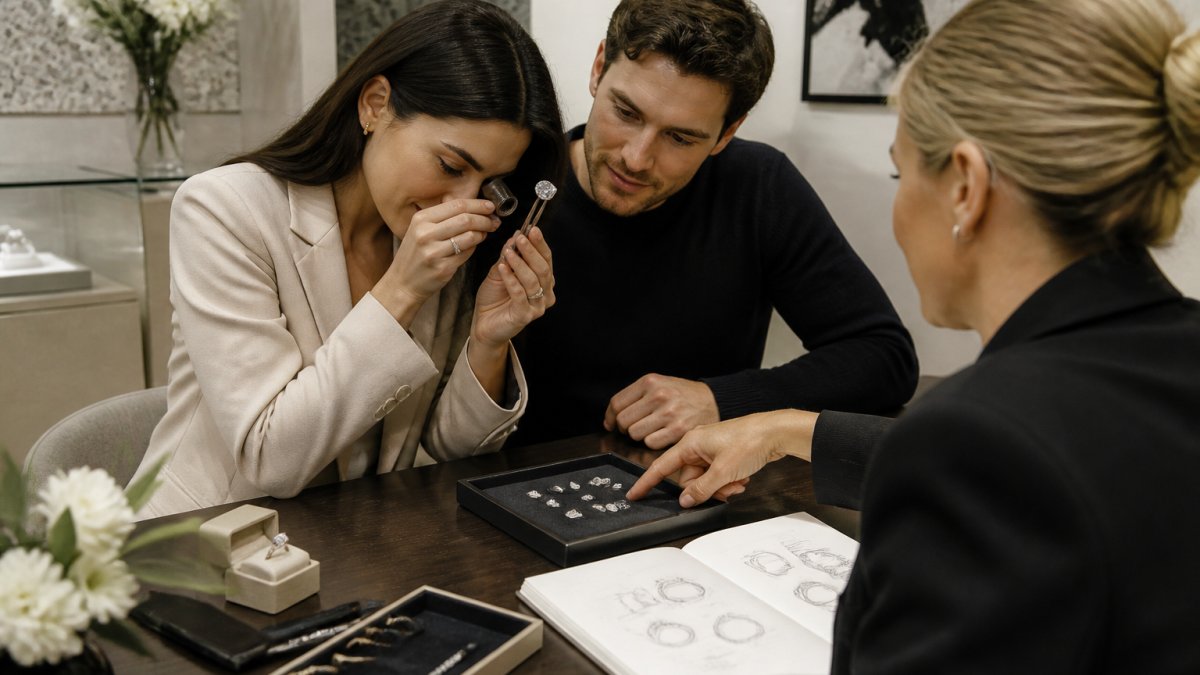
Our founder's experience in the diamond and gold fields of Sierra Leone shapes how we talk about stones.
Transparency is the part clients question most, usually because they have been burned elsewhere. We show you the certificate, explain the grades in plain terms and tell you when a cheaper stone will look identical on the hand.
You do not need to arrive with a design in mind. Most clients do not. Bring a sense of what you like and what you do not, and we will work from there.
Conclusion: Choosing Natural Diamonds with Confidence
The hardest part of buying a diamond is not the budget. It is the fear of getting it wrong, of paying more than you should for a stone you cannot properly assess. Certification, a clear view of the loose stone and an unhurried conversation remove almost all of that risk.
Choosing natural diamonds comes down to three things: a well-cut stone, a certificate you have read yourself and a jeweller willing to explain the trade-offs rather than talk around them. Get those right and the rest follows.
Frequently Asked Questions
What should I look for when choosing a natural diamond?
Start with the 4Cs: cut, colour, clarity and carat. Cut has the greatest effect on how a diamond handles light, so prioritise a well-cut stone over a larger, poorly cut one. Ask to see the diamond under magnification and in natural light, and check that it comes with an independent grading report. A private consultation lets you compare several loose natural diamonds side by side before committing to one.
What is the difference between natural and lab-grown diamonds?
Both are real diamonds with the same chemical composition and hardness. Natural diamonds formed underground over billions of years, while lab-grown diamonds are created in a controlled environment in a matter of weeks. The choice comes down to personal meaning, budget and how you feel about origin, not durability. MARA Bridal Luxury Jewellery offers both, so you can decide with full information rather than pressure.
Can I choose a loose natural diamond for a bespoke engagement ring?
Yes, and it is often the best way to design a ring. Selecting a loose natural diamond first lets you judge its cut, colour and clarity without the distraction of a setting, then build the band and setting around it. Bring any inspiration images to your consultation and the design team can work from the stone outward.
How can I tell whether a diamond is natural?
You cannot reliably tell by eye. Natural and lab-grown diamonds look identical to the naked eye, so identification depends on laboratory testing. Ask for the grading report and confirm which laboratory issued it. A reputable jeweller will show you the documentation and explain what each line means before you commit to a purchase.
If you are ready to see certified natural diamonds side by side and design something built around them, book a private consultation with MARA Bridal Luxury Jewellery in Melbourne. Our team offers unhurried one-on-one appointments, virtual try-on for remote clients, and full creative control over every detail of a bespoke piece, from the loose stone through to the finished setting.